TADA USA Guide
브로드웨이 공연 후 차량 만나기 | 극장가 픽업 위치 체크리스트
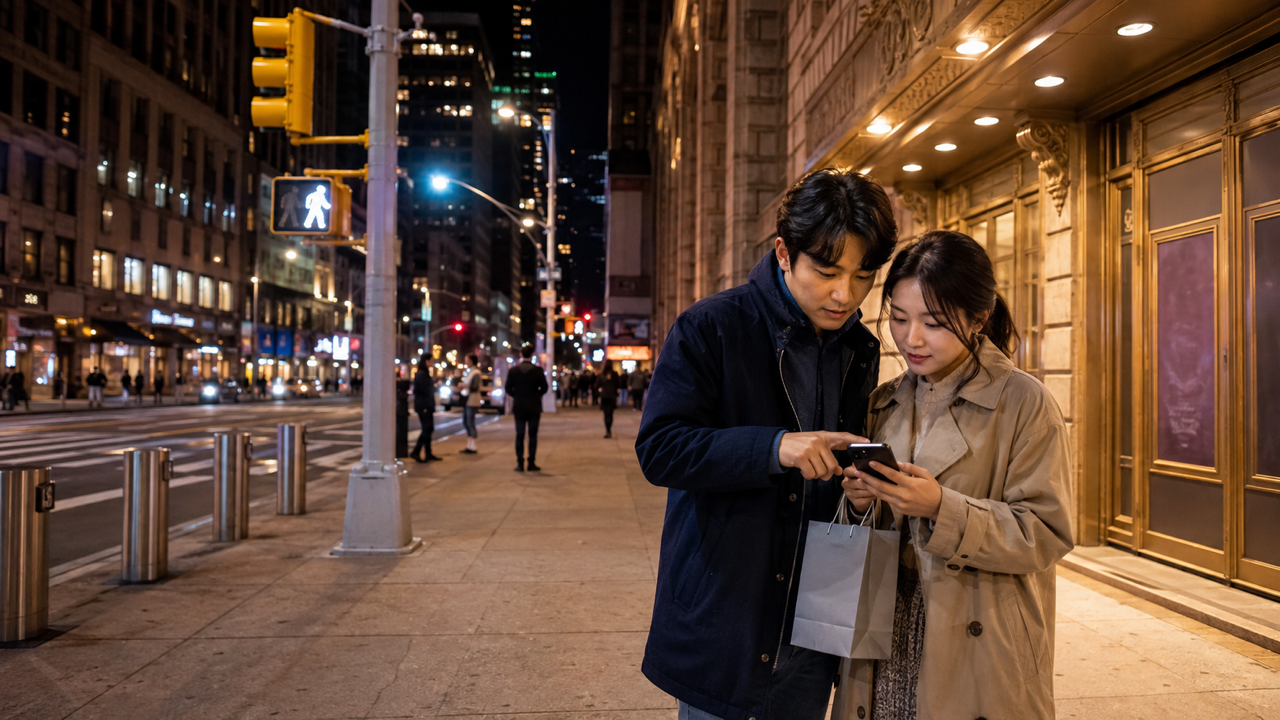
브로드웨이 공연이 끝나는 시간에는 여러 극장의 관객이 한꺼번에 거리로 나옵니다. 극장 정문 앞은 보행자와 차량이 뒤섞이고 도로 통제가 생길 수 있어, “공연장 앞에서 만나요”라는 약속만으로는 서로를 찾기 어렵습니다. 공연 전 정확한 출구와 교차로, 연락 방법을 정해 두면 늦은 밤에도 훨씬 차분하게 이동할 수 있습니다.
티켓에서 극장 이름과 실제 주소를 함께 확인하세요
비슷한 이름의 공연장이나 입구가 여러 곳일 수 있으므로 공연 제목만 전달하지 마세요. 전자 티켓에 표시된 극장명, 번지수, 도로명, 공연 날짜와 시작 시각을 함께 보내는 것이 정확합니다. 낮 공연과 저녁 공연은 종료 시각이 다르고, 인터미션이나 커튼콜에 따라 실제 퇴장 시점도 달라집니다.
예약 정보에는 예정 종료 시각과 함께 “마지막 인사까지 보고 나올 예정”인지도 적어 두세요. 공연이 예상보다 늦어지면 극장 안에서 전화가 어려울 수 있으므로 문자나 메신저를 기본 연락 수단으로 정하는 편이 좋습니다.
정문 바로 앞 대신 확인하기 쉬운 만남 지점을 고르세요
공연 종료 직후의 정문 앞은 사람의 흐름을 막지 않아야 하고 차량이 오래 정차하기도 어렵습니다. 가능하면 극장에서 한 블록 정도 걸어간 뒤, 도로명 두 개가 만나는 교차로와 건물 번호를 함께 지정하세요. 예를 들어 “8번가 쪽”보다 “○○ Street와 8th Avenue가 만나는 코너의 250번 건물 앞”처럼 양쪽이 같은 지점을 지도에서 확인할 수 있게 정합니다.
만남 장소를 고를 때는 밝은 조명, 넓은 인도, 비를 피할 공간, 공사 가림막 여부를 살펴보세요. 중앙분리대나 버스 차선 건너편처럼 차량이 접근하기 어려운 곳은 피하고, 횡단보도를 건널지까지 미리 합의해야 합니다.
차량이 서 있는 방향까지 메시지로 맞추세요
맨해튼의 일방통행 도로에서는 같은 교차로라도 어느 코너인지에 따라 차량 접근 방향이 완전히 달라집니다. 도착 메시지를 받으면 차량 색상만 찾기보다 현재 건물 번호, 도로의 어느 편인지, 가장 가까운 상점이나 로비처럼 바뀌지 않는 표식을 답장하세요. 운전 중인 상대에게 긴 전화 설명을 요구하기보다 짧은 위치 문장과 지도 핀을 보내는 것이 안전합니다.
차량에 타기 전에는 예약자 이름과 목적지를 서로 확인하세요. 혼잡한 극장가에는 비슷한 색상의 차량이 많으므로, 앱 화면이나 번호판만 보고 차도로 내려서지 말고 인도에서 확인을 마친 뒤 탑승합니다.
비·추위·휴대전화 배터리도 계획에 넣으세요
공연 중 휴대전화를 무음으로 두었다가 배터리가 부족해지는 경우가 있습니다. 좌석에 앉기 전 보조 배터리를 준비하고, 동행 중 한 명의 전화가 꺼져도 사용할 수 있도록 보조 연락처를 공유하세요. 우천 시에는 우산을 펼친 관객 때문에 시야가 더 좁아지므로, 정문 처마보다 호텔 로비나 밝은 건물 입구처럼 허용된 대기 장소를 정해 두는 편이 낫습니다.
어린이 또는 고령자와 함께라면 걷는 거리만 줄이는 것이 답은 아닙니다. 가장 가까운 지점이 지나치게 혼잡하면 조금 떨어진 넓은 인도까지 천천히 이동하는 편이 안전할 수 있습니다. 이동 보조기구가 있다면 접이식 여부와 크기도 예약 전에 알려야 합니다.
공연 전에 보낼 정보 체크리스트
- 극장 공식 명칭과 전체 주소
- 공연 날짜, 시작 시각, 예상 종료 시각
- 관객 수와 어린이·고령자·이동 지원 필요 여부
- 합의한 교차로, 건물 번호, 대기할 도로 쪽
- 주 연락처와 보조 연락처
- 공연 후 최종 목적지와 필요한 중간 정차
- 비나 도로 통제 시 사용할 예비 만남 장소
공연 일정과 만남 지점을 한국어로 미리 전달할 차량이 필요하다면 뉴욕 극장가 이동을 위한 한국어 차량 안내에서 예약에 필요한 정보를 확인할 수 있습니다.
퇴장 직전에는 세 가지만 다시 확인하세요
공연이 끝나면 먼저 휴대전화 알림을 켜고, 동행과 함께 약속한 출구로 이동한 뒤, 안전한 인도에서 차량의 도착 메시지를 확인하세요. 예정 종료 시각보다 크게 늦어진 경우에는 극장 밖으로 나온 뒤 현재 위치를 새로 보내야 합니다. 정문 혼잡을 벗어나기 전에 임의로 만남 장소를 바꾸면 서로 반대 방향으로 움직일 수 있습니다.
좋은 픽업 계획은 가장 가까운 곳에 차를 세우는 것이 아니라, 관객과 차량이 같은 위치를 오해 없이 확인하도록 만드는 것입니다. 교차로, 건물 번호, 도로 방향, 예비 장소까지 한 번에 정해 두면 공연의 여운을 급한 길 찾기로 끝내지 않아도 됩니다.
When Broadway performances end, audiences from several theaters enter the street at nearly the same time. The curb at the main entrance can become crowded, temporary traffic controls may appear, and “meet us in front of the theater” may not identify one usable spot. Agreeing on an exit, cross street, and contact method before the show makes a late-night pickup much easier.
Share the theater name and complete address
Do not send only the show title. Use the official theater name, street number, street name, performance date, and start time shown on the ticket. Matinees and evening shows finish at different times, while intermission and curtain calls can shift the actual exit time. Say whether you plan to remain through the final bow and use text or messaging as the primary contact method when calls inside the theater are impractical.
Choose an identifiable point away from the main doors
The sidewalk directly outside the entrance must keep moving, and a vehicle may not be able to wait there. When practical, walk about one block and identify two cross streets plus a building number. “The corner of a named street and avenue, outside building 250” is clearer than “on the avenue side.” Check for lighting, sidewalk width, construction barriers, weather cover, and whether crossing the street is required.
Confirm the side of the street
One-way streets make the exact corner important. When the vehicle arrives, reply with your building number, the side of the street, and a stable landmark such as a lobby entrance. A short location sentence and map pin are safer than asking someone who is driving to follow a long phone explanation. Before entering, confirm the passenger name and destination from the sidewalk.
Plan for weather and phone battery
Bring a charged power bank and share a second contact number. In rain, umbrellas make a crowded entrance harder to navigate, so an approved hotel lobby or bright building entrance may be a better backup point. For children, older travelers, or mobility devices, the closest curb is not always the safest; disclose equipment dimensions and choose a route with enough sidewalk space.
Information to send before the performance
- Official theater name and complete address
- Performance date, start time, and estimated finish
- Passenger count and mobility needs
- Agreed cross streets, building number, and side of the road
- Primary and backup phone numbers
- Final destination and necessary stops
- A weather or road-closure backup meeting point
Share the performance time, exact meeting point, passenger count, and final destination when arranging the ride. Confirm the pickup side of the street, contact method, and waiting plan before the performance ends.
Recheck three details before leaving
Turn notifications back on, leave through the agreed exit with your group, and read the arrival message from a safe place on the sidewalk. If the show runs substantially late, send your current location after leaving the building. Avoid changing the meeting point while both sides are moving in opposite directions.
A strong pickup plan is not about stopping at the closest possible curb. It gives the passenger and vehicle the same unambiguous point: cross streets, building number, road side, and a backup location.